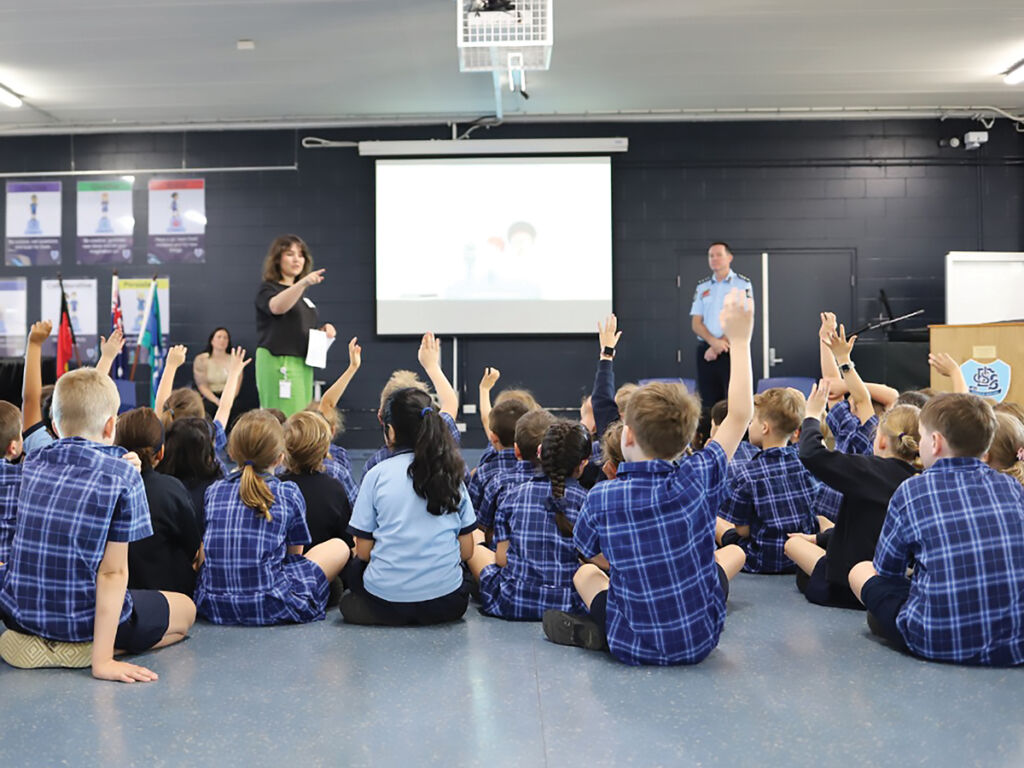
ThinkUKnow student presentation.
While digital spaces can be a positive way to build friendships, they also raise important questions about how safe those connections really are. The ThinkUKnow program is designed to help.
Last year, more than 202,000 students and over 19,300 community members attended ThinkUKnow presentations. Feedback consistently shows the program plays a valuable role in improving digital awareness and confidence among both young people and adults when it comes to online child safety.
ThinkUKnow is a national, evidence-based online safety education program led by the Australian Federal Police (AFP). Rather than discouraging technology use, the program takes a practical approach, helping young people learn how to use online platforms safely, respectfully and responsibly, and understand where to seek help if something goes wrong.
Student presentations are available from Foundation through to Year 12 and are tailored to suit different age groups. Sessions cover topics such as online grooming, self-generated child abuse material, sexual extortion and, importantly, building confidence in help-seeking behaviours. All content links with the Australian Curriculum and is informed by current research, intelligence and real case studies.
Parent and carer presentations are offered alongside student sessions, ensuring adults have the knowledge and tools to support children at home. These sessions encourage open, ongoing conversations about online experiences and help families and community groups create safer digital environments together.
ThinkUKnow is delivered nationally in partnership with state and territory police and industry supporters including Commonwealth Bank, Microsoft, Datacom, and Neighbourhood Watch Australasia. Student sessions are delivered by police, while parent and carer presentations are facilitated by trained volunteers from the AFP, police and partner organisations.
Request a free presentation
Schools and community groups can request a free ThinkUKnow presentation via the ThinkUKnow website. By taking part, communities can help children and young people build the confidence, resilience and skills they need to navigate both online and offline worlds safely.
www.thinkuknow.org.au/request-presentation